There is a photograph I cannot bring myself to frame— your smile caught mid-laugh, the sunlight painting gold across your shoulders, that ordinary Tuesday that felt like nothing special until it became everything I had left.
We never know which moments we’re supposed to memorize. We never know which goodbye will be the last one, which “see you tomorrow” will echo in the hollow chambers of our hearts for all the tomorrows that never came.
I have learned that grief is just love with nowhere left to go, a river that cannot find the sea, so it carves new paths through us instead— canyons and valleys where joy once lived, landscapes forever changed by the force of what we’ve lost.
But let me tell you about love, too.
Let me tell you about the way my grandmother’s hands folded pie crust, her fingers bent with arthritis but still somehow creating beauty, how she hummed hymns she learned as a child in a language she’d almost forgotten, how the kitchen smelled like cinnamon and time itself, slowing down, savoring, staying.

Let me tell you about my father’s silence— not the cold kind, but the warm one, the way he’d sit beside me on the porch when words felt like too much, how his presence was a sentence complete unto itself, how I learned that love doesn’t always speak, sometimes it just shows up and stays.
I think about the teacher who saw something in me I couldn’t see in myself, who wrote in the margins of my essays: “Your voice matters. Keep writing.” How those four words became a lifeline on the days when I wanted to disappear, how one person’s belief can become the foundation another person builds a life on.
We are all broken things trying to make light shine through the cracks.
We are all carrying invisible weight— the friend who smiles through chronic pain, the stranger on the subway whose eyes look hollowed out by a loss too fresh to speak about, the cashier who asks “how are you?” even though their own world is crumbling, because sometimes holding space for someone else’s joy is the only thing keeping us from drowning.
I have been that person. You have been that person. We have all been that person.
And isn’t that the most beautiful tragedy? That we suffer alone together, that we break in the same places, that we all know what it means to love something so much it becomes a kind of religion, and to lose it, and to somehow keep breathing anyway.
I remember the night my best friend called at 3 AM, voice shaking, world ending, and I drove through empty streets with sleep still in my eyes because that’s what we do— we show up for each other’s darkest hours even when we’re barely holding on ourselves.
That’s love too. The unglamorous kind. The kind that doesn’t make it into movies. The kind that looks like dishes in the sink because someone’s depression won’t let them get out of bed, so you wash them without being asked. The kind that looks like texting “thinking of you” to someone who might need to know they’re not forgotten.
There’s a word in Japanese—kintsugi— the art of repairing broken pottery with gold, understanding that the piece is more beautiful for having been broken. That the cracks are part of the story. That wholeness isn’t about perfection; it’s about integration.
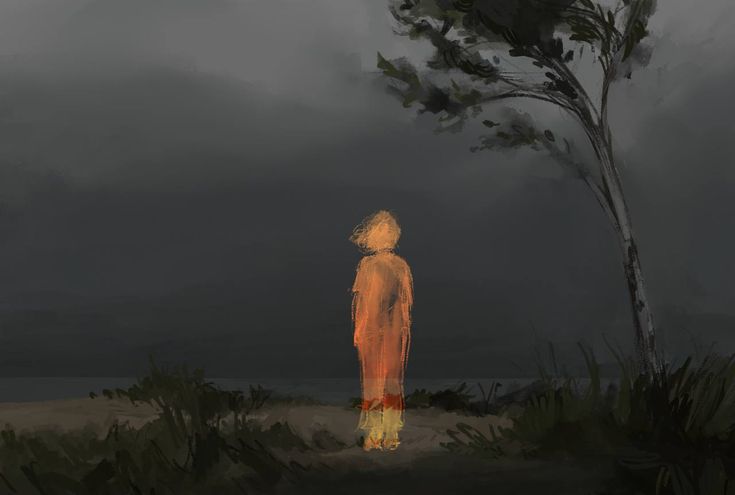
I think we are all kintsugi, all of us walking around with our golden seams, pretending we were never shattered, afraid to let people see where we’ve been carefully glued back together.
But what if we stopped hiding?
What if we let our scars be maps that help others navigate their own darkness? What if we said the true things, the hard things, the “me too” things that make strangers feel less alone?
I have sat in circles where people shared their stories— the miscarriage no one talks about at dinner parties, the addiction that nearly cost them everything, the way they survived their childhood by building walls so high they forgot how to let people in.
And I have watched as strangers became witnesses, as tears fell without shame, as someone whispered “I thought I was the only one,” and the whole room exhaled like we’d all been holding our breath for years.
This is what saves us: not the big moments, not the grand gestures, but the small, persistent acts of showing up.
The friend who texts every Sunday just to check in. The neighbor who shovels your driveway when you’re too depressed to leave the house. The stranger who held the door and smiled like they meant it, and somehow that smile was the first kind thing you’d encountered all week.
We are saving each other in ways we’ll never know.
My mother used to say that people come into our lives for a reason, a season, or a lifetime, and I used to think I understood, but now I know that every person who touches us leaves something behind— a lesson, a memory, a way of seeing the world we wouldn’t have found on our own.
The boy who broke my heart in high school taught me that I could survive breaking. The professor who failed me taught me humility. The friend who betrayed me taught me discernment. The lover who stayed taught me that I was worth staying for.
Even the painful gifts are gifts. Even the teachers who hurt us are teaching us something.
I am thinking of all the people I’ve lost— some to death, some to distance, some to the natural drift of time that pulls us in different directions like rivers branching from the same source.
I am thinking of how they live in me still, in the way I laugh too loud because my college roommate taught me that joy doesn’t need permission, in the way I tip generously because a waiter once told me about his daughter’s medical bills, in the way I stop to help lost tourists because a stranger did that for me once in a foreign city when I was young and scared and far from home.
We are made of everyone we’ve ever loved. We are collages of kindness, mosaics of moments, tapestries woven from a thousand small threads of connection.
And when I am gone— when this body returns to the earth and this breath becomes wind— I hope I have left some light behind.
I hope someone remembers that I tried to listen more than I spoke, that I showed up when it mattered, that I forgave easily because life is too short to hold grudges and too precious to waste on bitterness.
I hope they remember that I believed in second chances, in redemption, in the beautiful possibility that tomorrow could be different, that we could be different, that love—persistent, patient, imperfect love— could change everything.
Because it does. It already has. It will again.
So here is my prayer for you, dear reader:
May you know that you are loved, even when you feel most unlovable. May you find beauty in the breaking, and strength in the softness. May you give yourself the grace you so freely offer others. May you remember that your story isn’t over, that the next chapter is unwritten, that there is still time for plot twists and miracles and ordinary magic.
May you be gentle with your own heart. May you let people in. May you risk being seen.
And may you know—deeply, truly, without question— that your presence here matters, that the world is different because you’re in it, that someone, somewhere, is grateful you exist.
Even if that someone is me, a stranger on the internet, writing these words in the hope that they find their way to you on a day when you need to hear them, on a day when you’ve forgotten your own light.
You are the light. You always have been.
Beautiful.